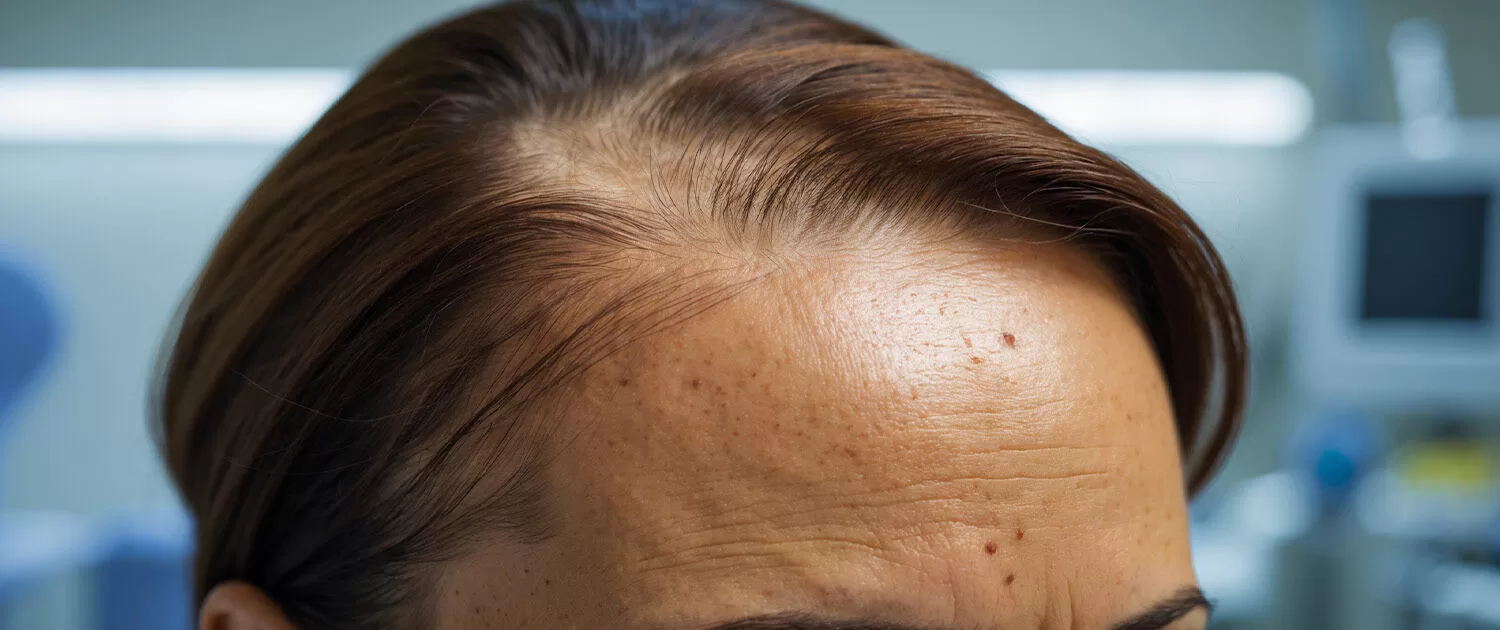
Hormonal Imbalances and Hair Loss During Perimenopause and Menopause

Hormonal changes during perimenopause and menopause can dramatically affect your hair’s health, texture, and thickness. One of the most common causes of hair thinning during this time is a drop in estrogen and progesterone levels — two hormones that normally help promote hair growth and maintain hair density.

As these hormone levels decline, androgens (like testosterone) may become more dominant, potentially shrinking hair follicles and slowing hair regrowth. This shift can lead to a hormonal pattern of hair loss, often seen as general thinning across the scalp, especially around the crown or temples.

In addition to hair loss, many women experience dryness, brittleness, and increased breakage during menopause. This happens because lower estrogen levels reduce the scalp’s ability to produce natural oils, leaving hair feeling coarse, lifeless, and more vulnerable to damage.

While menopausal hair loss can cause you to feel anxious about your physical appearance and even lower your self-esteem, the condition is treatable! There are many steps you can take to improve the quality of your hair from the inside out.

At Guci Image, we understand how emotionally and physically difficult this stage can be. That’s why we specialize in non-surgical, science-backed hair restoration solutions designed specifically for women experiencing hormonally driven hair changes. With nearly 30 years of expertise, we help you reclaim confidence and Hair— strand by strand.

Find Out What’s Causing Your Hair Loss!

30 Seconds. 8 Simple Questions.
Online Assessment

Request Your Complementary Consultation

Understanding Hair Loss After Menopause and How to Address It

Menopause marks a significant transition in a woman’s life — bringing with it emotional, physical, and hormonal changes. While some of these changes are welcomed, others can be more distressing. One of the most frustrating and emotionally challenging issues women face during this time is hair loss after menopause.

Unlike men, whose hair loss is often seen as a normal part of aging, hair thinning or shedding in women is far less socially accepted, making it even more difficult to cope with. The emotional toll can be profound — affecting confidence, identity, and everyday interactions. For many women, hair is closely tied to femininity, and losing it can feel like losing a part of themselves. That’s why so many women facing this problem are urgently searching for real answers and effective solutions.

Why Does Hair Loss Occur After Menopause?

After menopause, estrogen and progesterone levels decline significantly. These hormones help stimulate healthy hair growth and maintain the fullness and thickness of hair. As they drop, androgens (male hormones) may increase in relative dominance, leading to hair follicle miniaturization — where strands become thinner and grow more slowly. This often results in diffuse thinning across the scalp, rather than patchy bald spots. At the same time, reduced oil production can make hair feel dry, brittle, and prone to breakage, further compounding the issue.

Additionally, other factors like thyroid imbalances, nutritional deficiencies, and stress can worsen hair loss during and after menopause. Understanding whether your hair loss is purely hormonal or connected to broader health issues is crucial to finding the right treatment approach.

Book Your Consultation Today!

Contact Us

How to Begin Addressing Post-Menopausal Hair Loss

The good news is, today’s technology offers effective, non-surgical solutions for women experiencing hair loss after menopause. At Guci Image, we take a personalized approach — starting with a detailed consultation to determine the root cause of your thinning. Whether it’s advanced laser light therapy, customized non-surgical hair augmentation, or professionally guided product protocols, our solutions are designed to fit your lifestyle and restore not just your hair — but your self-esteem.

With nearly three decades of innovation and leadership in the field of women’s hair loss, we’ve helped thousands reclaim their confidence. You don’t have to accept thinning hair as your new normal — real transformation begins with the right support.

talk-bubbles-lineRequest a

Complementary Consultation